In recent years, major motorcycle manufacturers have begun installing speed governors on certain models. The first time we encountered one of these devilsome electronic bugaboos was with a 2011 Honda CB1100 retro we’d purchased to modify in the magazine. A fellow CB1100 owner approached us, lamenting hidden speed control software that had been installed by the factory in the ECU (or Electronic Control Unit, the bike’s on-board computer.) “Once you hit 112 miles per hour, the engine will retard two cylinder’s spark plugs, killing acceleration,” he schooled us. Sure enough, I immediately tested this strange theory on an empty, local Interstate and lo and behold, the Honda instantly lost speed like we’d hit some sort of invisible wall. In time, our team was contacted by Guhl Motorsports, a Cebntral Pennsylvania tuning shop who offered to re-flash the Honda’s electronic brain, thereby ridding the bike of its nanny state oversight software.
The results were staggering- the CB100 was re-born and then some, with rear wheel horsepower skyrocketing from 112 to north of 148 and the top speed easily reaching 0ver 150 MPH. Since then, we’ve assidiously avoided motorcycles fitted with these devices that, some industry insiders will tell us (off the record, of course) are installed to make sure riders don’t hurt of kill themselves with powerplants that produce far more power and speed then the average rider can realistically handle.
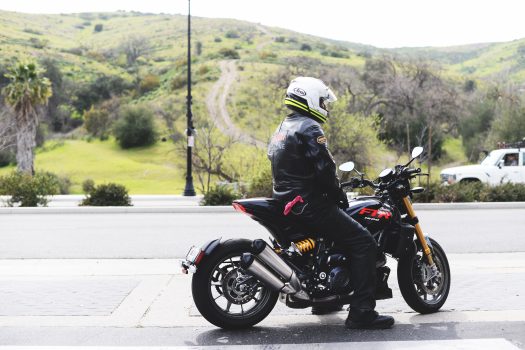
Nevertheless, we’ve run afoul of the dreaded speed governor again, this time with the 2024 Indian FTR 1200 now sitting in the CRM garage. The FTR is a wonderful, torquey piece of two-wheeled technology. It’s a relatively large machine, with a lanky, 60-inch wheelbase and a wet weight of 518 pounds. It’s no featherweight, but the FTR is very stable in turns, handles nicely and is all-day comfortable. It’s 125 horsepower, 87 foot-pound V-twin engine is a real peach, propelling the Indian down the road with a downright ferocious level of thrust.
However, it too has been limited to just 125 MPH, which is a very limited terminal velocity of such a robust engine.
There’s complaints a’plenty of web discussion boards about this one shortcoming of the FTR, and a Minnesota racing shop, Lloyd’s, even offers a re-flash tune that promises to uncork everything the safety mavens at the Indian factory felt too much for the average customer.
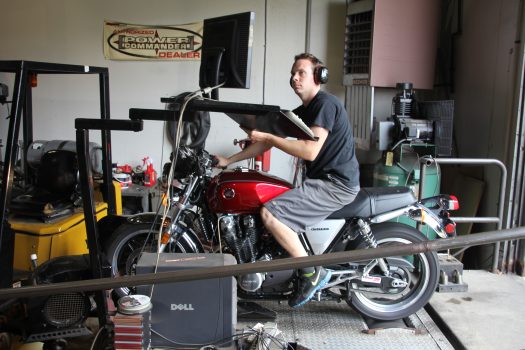
We recently had the FTR dynoed to test its current state of tune where we found some surprising results which we’ll detail in Cafe Racer magazine’s upcoming June/July issue. The diagnosis from veteran motorcycle tuner Joe Destefano opens all sorts of doors into how to make this formidable bike even more so, while possibly helping readers find more performance lurking inside their own bikes. Stau tuned.