
1979 was a big year in my house- I turned the magic age of 16, meaning a license to operate a motorcycle on the street was possible and, if I had anything to do with it, inevitable. I’d managed to talk my way into a job at a local fast-food joint at age 15 (computerized age checks didn’t exist back then) and I worked as many hours as my high school schedule would allow. My head buried firmly in any motorcycle magazines I could find, I vacillated between buying a sporty Japanese motorcycle and a Harley-Davidson Sportster. The latter had a death grip on my teenage imagination, due to repeatedly watching a neighbor ride his showroom-fresh 1978 XLH down my street all the previous summer. I’d spent enough time around the old heads in the local biking scene to know that owning a Harley would require my learning the ins and outs of motorcycle mechanics in a very short time, while opting for a Japanese bike meant nearly maintenance-free riding.

The choices were stark: the Sportster sounded like a top-fuel dragster rolling down the road with its mufflers long-since ditched (as was the style both then and now) and looked damned cool doing so. Meanwhile, having just learned the first tenuous steps of motorcycle operation, the idea of purchasing a fast, sporty imported bike that I could neither handle nor appreciate seemed a recipe for disaster.
One Japanese bike in particular did capture not only my attention, but that of many of my classmates. Honda’s trick new CB750F Supersport was a bold design for the days before fairings and race replicas took to the roads. The sculpted, one-piece bodywork looked like nothing else in showrooms and having seen firsthand what sorts of speeds they were capable of by visiting a nearby drag strip, proved these were no ordinary machines. The CB instantly made moot the task of modifying an ordinary motorcycle to look and run like a real racebike; it came stock with the velocity and style to make anyone a would-be Barry Sheene.
After over a year spent flipping more hamburgers than I could count and augmenting my already prevalent teen acne with plentiful grill grease, I opted to spend my hard-earned on a motorcycle that seemed to fall somewhere in between these two starkly different choices: I purchased a new-for-1979 Yamaha XS650 Special, a deep red neo-cruiser parallel twin that proved just right for my nascent skills. Well, that and once the accursed mufflers had been removed, sounded enough like a Sportster that I didn’t mind the Yamaha tank badge.
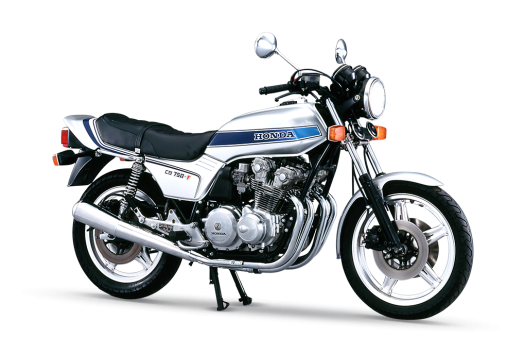
My good friend Lance Arrington bought a CB750F and it proved more than everything we’d imagined. Impossibly sleek, quiet and filled with exotic tech, the black and orange missile boasted an inconceivable 16 valves, tall, racy suspension, a pair of two-into-one chromed exhausts and a top speed over 125 MPH. Though my XS could make the girls stare (mostly in annoyance) when I twisted the throttle, Vance’s Honda could stand on its rear wheel seemingly on a whiff of throttle, and whip around corners as if caught in a Star Wars tractor beam.
I’m sure there are many other riders who came of age around this time who fondly recall the magical looks, ride quality and performance of the CB750F and they’ll undoubtedly form the customer base for Honda’s revisionist take on this legendary bike, due to reach the streets later next year.
The new, 1000cc version of the CB750K was displayed at the 2020 Tokyo Motor Show as a concept vehicle. This breed of experimental rides seldom reaches full production status, but positive response to the retro bike was so overwhelmingly strong, that Honda rushed it into reality. The CB-F project as it’s known at Big Red’s factory, shares much of the original, 1979 motorcycle’s DNA: the engine remains a 16-valve, inline four-cylinder layout, this engine borrowed from the globally popular Hornet 1000 naked bike. Being a 2026 model, it’s equipped with a host of modern electronic rider aids including traction control, an up/down quickshifter, ABS and other trickery Vance and I couldn’t have dreamt up in a million lifetimes.
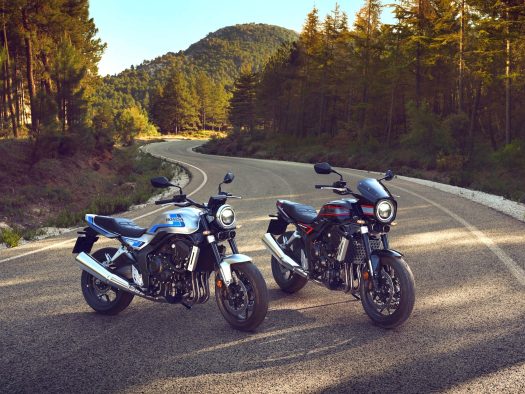
It also shares the Hornet’s steel diamond chassis and adjustable Showa rear monoshock, while the inverted Big Piston forks are also wearing the Showa tag. Horsepower has been cut a bit from the Hornet’s 155 to a more manageable 122 ponies, but peak torque is still hearty at 76 foot-pounds delivered at a very accessible 8000 RPM. Why the reduction in power? Well, Vance and I are far older than we once were and Honda, like most motorcycle manufacturers, are aware that folks who dig retro rides generally care less about outright performance than do the buyers of full-on race replica machines. Still, the rumor mill is rife with performance projections, estimating a top speed somewhere around 140 MPH which should prove plenty.
I’m willing to bet a shift behind the greasy, pimple-inducing grill at McDonald’s that the CB1000F becomes a huge global seller and for good reason; throwing a leg over a motorcycle evocative of one’s past is a big draw these days and when these revisionist pieces of our youth show up looking this good and promising so much, it’s hard to resist stepping back in time.


